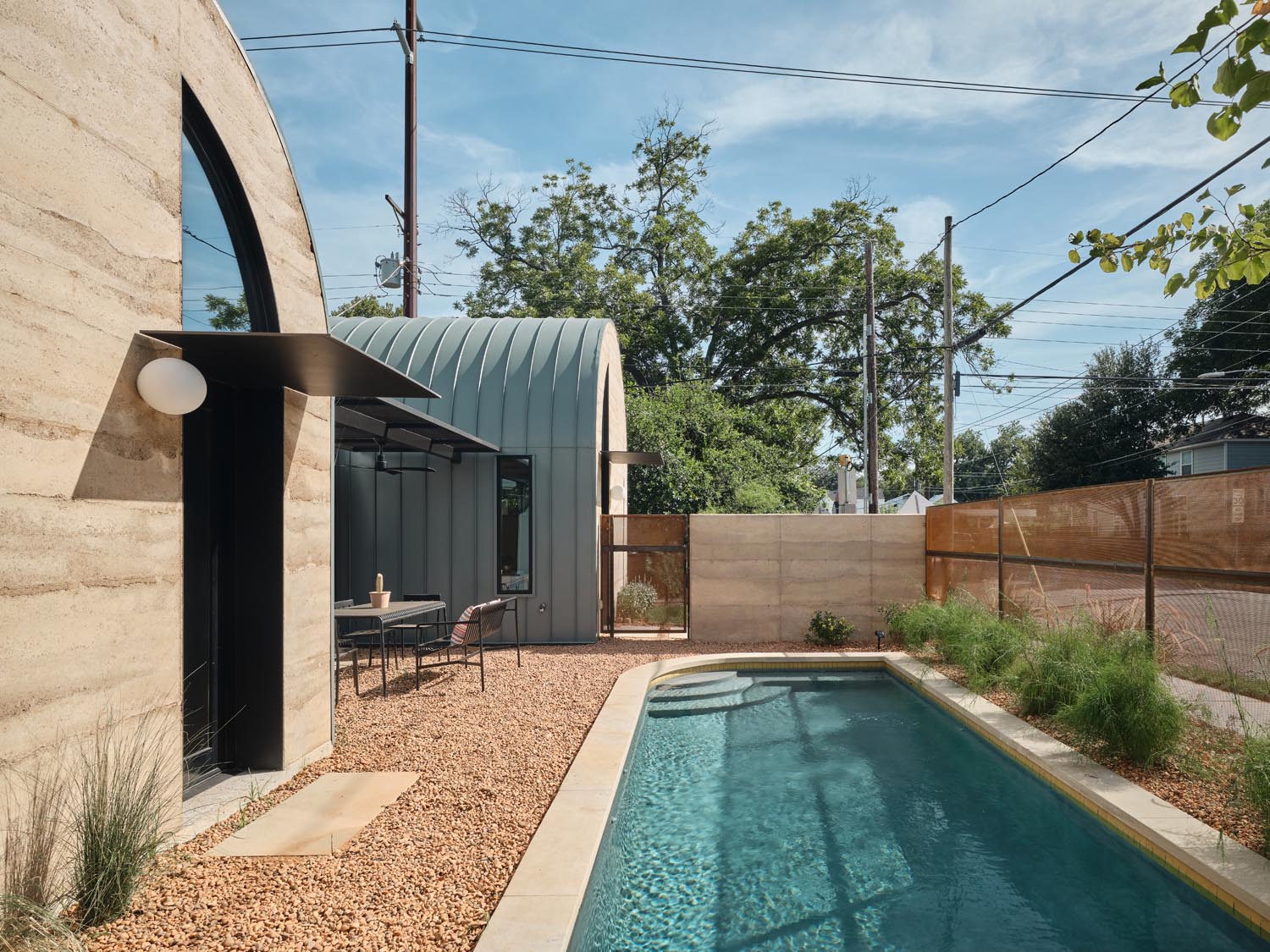
We spoke with Davey McEathron of Davey McEathron Architecture & Interiors (DMA) about his rammed earth ADU on the 2026 Austin Modern Home Tour. In addition to this project, DMA has a hand in several other 2026 Tour homes.
Rammed earth is an ancient, sustainable building technique where a mixture of damp soil, sand, gravel, and clay, often found on-site or nearby, is compacted into sturdy, load-bearing walls.
Images: Jeremy Doddridge
This structure uses an ancient, but unique, construction method called “rammed earth.” Whose idea was using rammed earth construction, and why was this material chosen?
DM: We’ve collaborated with this same developer/builder (Rabb Construction) on several projects, and they consistently look for opportunities to push design and construction in playful, experimental ways. The idea to use rammed earth originated with them as part of that ongoing spirit of exploration.
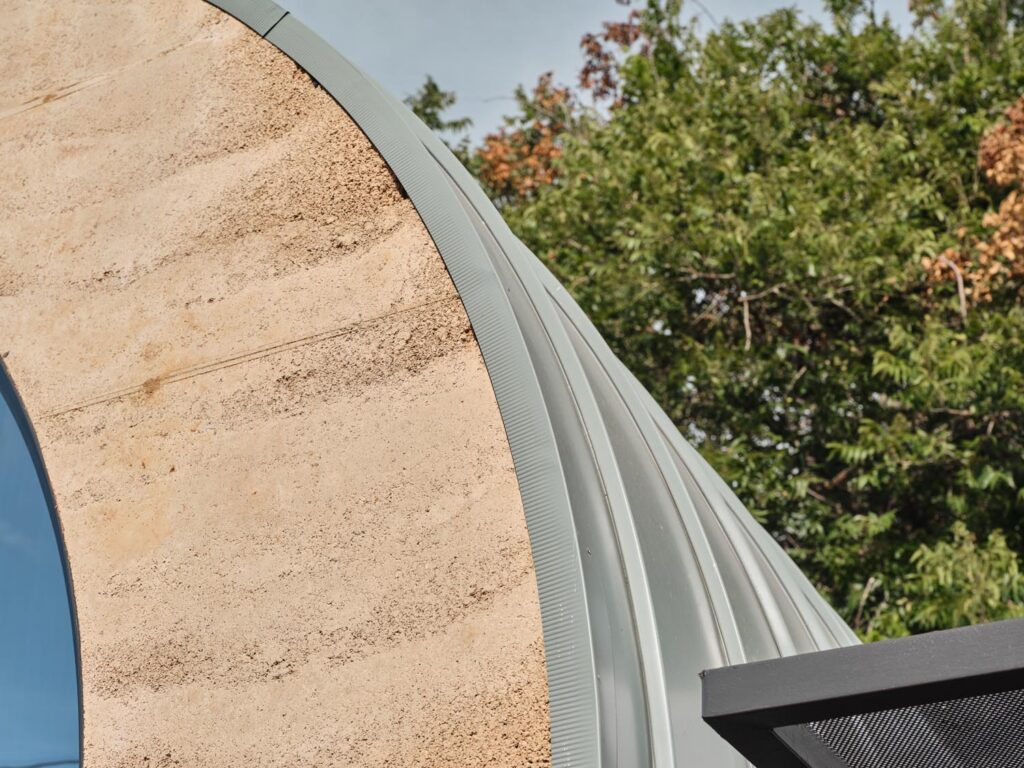
Given that the project sits on a corner lot with its long elevation facing west, rammed earth immediately made sense from a performance standpoint. Its thermal mass helps regulate interior temperatures, mitigating direct solar exposure. Beyond performance, the material’s natural stratification and color variation offered a unique aesthetic opportunity we were excited to utilize.
Neither our office nor the builder had previously worked with rammed earth, so we all attended a hands‑on workshop in Arizona with Quentin Branch to understand the material’s structural behavior, mix design, and formwork requirements. The builder ultimately self‑performed all the rammed earth construction, which became a meaningful part of the project’s craft identity.
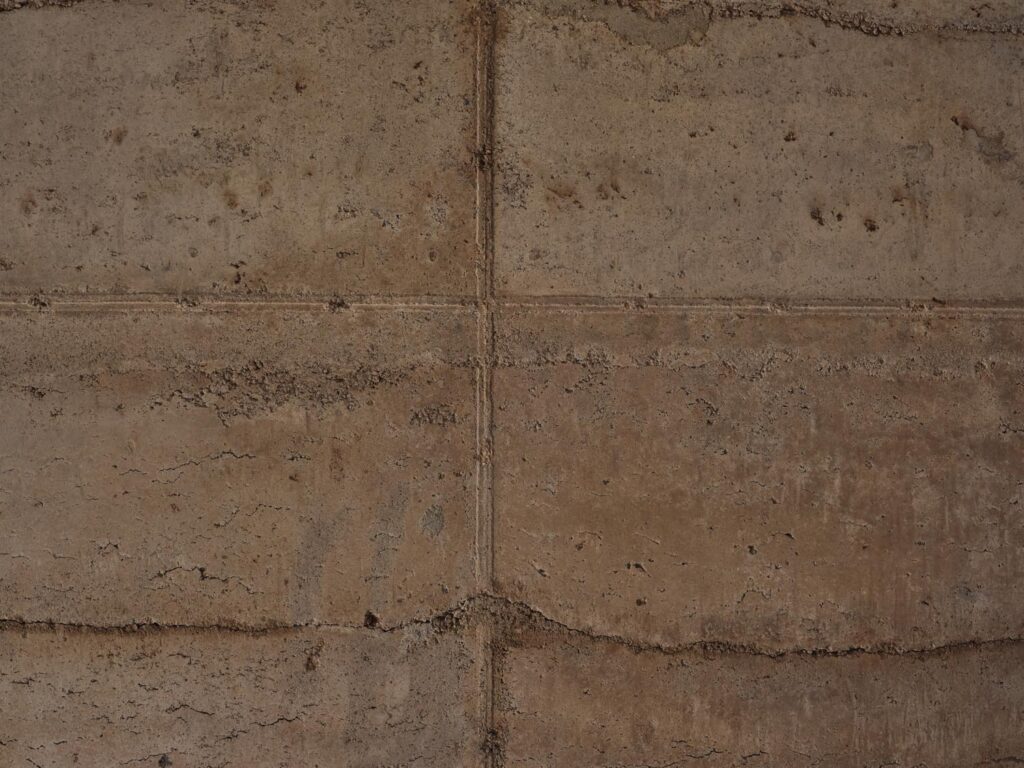
Rammed earth detail
Is the ADU constructed with earth harvested on site, or did you have to import/locate another source of material?
What were the challenges of designing around rammed earth from an architectural standpoint, and conversely, did rammed earth construction allow any architectural advantages (i.e. irregular forms, etc.) over more standard methods?
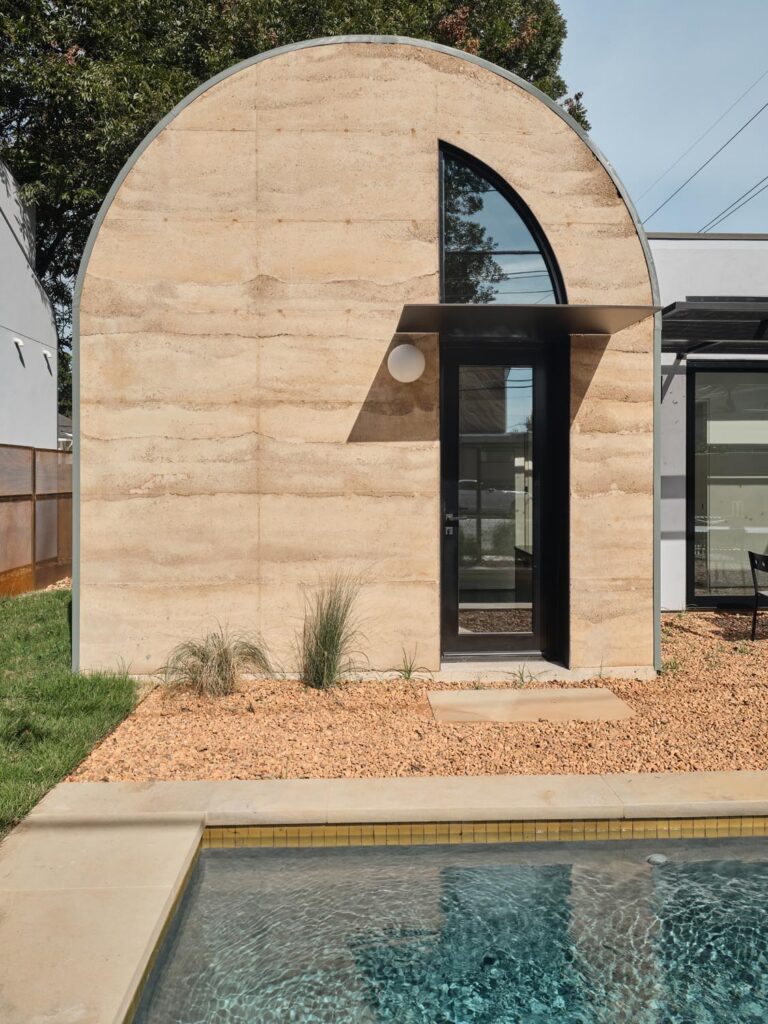
DM: From an architectural standpoint, the fundamental constraint was accommodating 24-inch-thick monolithic walls. Beyond that, the design process was surprisingly fluid. Our initial concept used simple, rectilinear rammed earth walls, but when we shared it with the builders, they challenged us to be bolder and take advantage of the material’s sculptural potential.
The final geometry — more organic and expressive — emerged from that collaborative push-and-pull. Rammed earth’s mass and continuity made those shapes feel authentic and grounded in a way conventional construction never could. The monolithic nature, the color and texture inherent to the material enhance the curves. If we had attempted the same shapes in stick framing with applied siding, the result would have felt forced and visually awkward.
Are there any other nontraditional construction techniques you would like to use (or are in the process of using) in the future?
DM: Absolutely. I’m particularly interested in the possibilities of 3D‑printed construction, especially when used to create biophilic, nature‑inspired geometries that are difficult or inefficient to build with conventional methods. Incorporating emerging materials — such as biochar‑enhanced concrete — offers exciting potential for carbon‑sequestering, sculptural building envelopes.
More broadly, we’re always open to experimenting with materials and form. Our goal is to create work that sparks curiosity, performs intelligently, and ultimately brings joy to the people who interact with it.